

Understanding Sleep Disorders
Obstructive Sleep Apnea and Snoring
Learn About the Conditions We Treat
Obstructive Sleep Apnea
What Is Obstructive Sleep Apnea?
Obstructive sleep apnea (OSA) is a serious sleep disorder in which the airway repeatedly collapses during sleep, causing breathing to stop — sometimes hundreds of times per night. Each pause can last from a few seconds to over a minute, depriving the brain and body of oxygen, and putting stress on your heart. Most people with sleep apnea are completely unaware it is happening.
OSA is one of the most common sleep disorders in the United States, affecting an estimated 30 million adults — yet the majority remain undiagnosed. Left untreated, sleep apnea significantly increases the risk of heart disease, stroke, high blood pressure, dementia, type 2 diabetes, and motor vehicle accidents.
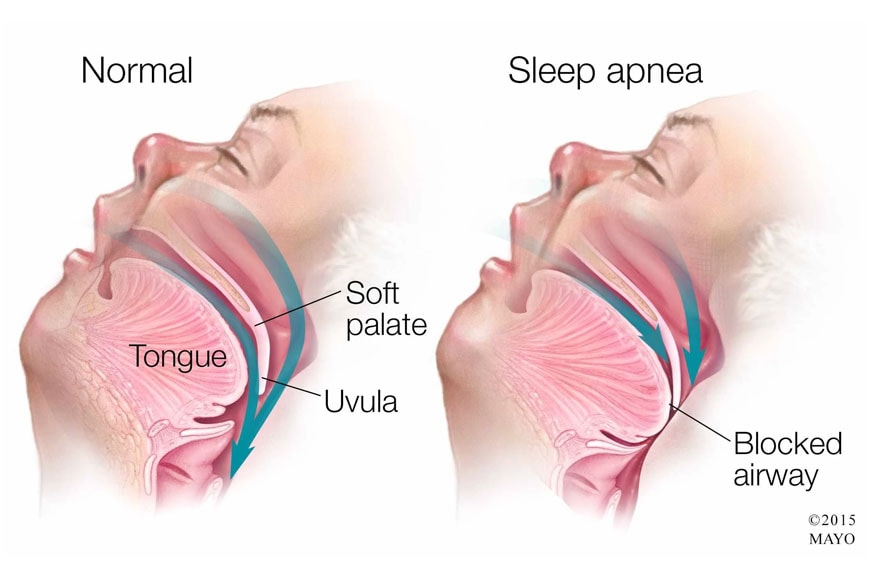
Anatomy of obstructive sleep apnea — airway collapse during sleep
Common Signs and Symptoms
Sleep apnea often goes unrecognized because its most disruptive symptoms occur during sleep. Common warning signs include:
Free Screening Tool
Not Sure If You Have Sleep Apnea?
Take our free STOP-BANG sleep assessment — 8 quick questions that help identify your risk level for obstructive sleep apnea. Get an instant result with no appointment needed.
Health Risks of Untreated Sleep Apnea
Sleep apnea is far more than a snoring problem. Chronic oxygen deprivation and disrupted sleep place significant stress on the cardiovascular system and the entire body.
Heart Disease & Stroke
Repeated drops in blood oxygen levels strain the heart and increase the risk of high blood pressure, irregular heart rhythms, heart attack, and stroke.
Type 2 Diabetes
Sleep apnea disrupts glucose metabolism and insulin sensitivity, making it harder to manage or prevent type 2 diabetes.
Cognitive Impairment
Fragmented sleep impairs memory, concentration, and decision-making — and is associated with a higher long-term risk of dementia.
Daytime Fatigue & Accidents
Excessive daytime sleepiness caused by untreated OSA significantly increases the risk of workplace accidents and drowsy driving.
How We Treat Obstructive Sleep Apnea
At Dental Sleep Solutions, we specialize in oral appliance therapy — a comfortable, quiet, and highly effective CPAP alternative worn during sleep that works by gently repositioning the jaw to keep the airway open.
Mandibular Advancement Devices
Custom-fitted oral appliances that hold the lower jaw slightly forward, preventing airway collapse. Covered by most medical insurance plans including Medicare.
Chronic Snoring
What Is Chronic Snoring?
Snoring occurs when airflow through the mouth and nose is partially blocked during sleep, causing the surrounding tissues to vibrate and produce sound. Occasional snoring is common, but chronic snoring — happening most nights — is a sign that something is interfering with your airway.
Left untreated, chronic snoring can strain relationships, disrupt your partner's sleep, and may indicate obstructive sleep apnea (OSA), a condition where breathing repeatedly stops during sleep. At Dental Sleep Solutions, we evaluate the root cause of your snoring and offer effective, non-CPAP treatment options.
Common Causes of Chronic Snoring
Obstructive Sleep Apnea
The most serious cause of snoring. The airway collapses repeatedly during sleep, causing loud snoring, gasping, and fragmented rest.
Soft Palate Laxity
A loose or elongated soft palate vibrates against the back of the throat during breathing, producing the characteristic snoring sound.
Nasal Congestion
Chronic allergies, a deviated septum, or nasal polyps can force mouth breathing, which increases airway turbulence and snoring.
Tongue Position
During sleep, the tongue can fall back and partially block the airway — especially when sleeping on your back or after alcohol consumption.
Excess Tissue
Extra tissue in the throat or a large uvula can narrow the airway and contribute to vibration and noise during sleep.
Weight & Anatomy
Excess weight around the neck, a short jaw, or certain facial structures can predispose individuals to airway narrowing during sleep.
Why Snoring Shouldn't Be Ignored
Disrupted Sleep Quality
Even without full apnea events, snoring fragments sleep architecture and prevents deep, restorative rest.
Cardiovascular Strain
Chronic snoring and sleep apnea are linked to elevated blood pressure, increased risk of heart disease, and stroke.
Daytime Fatigue
Poor sleep quality leads to excessive daytime sleepiness, difficulty concentrating, and reduced productivity.
Relationship Impact
Snoring is one of the leading causes of sleep disruption for bed partners, often leading to separate sleeping arrangements.
How We Treat Chronic Snoring
We offer two highly effective, non-surgical treatment options for chronic snoring — both available at our Greenville and McKinney offices.
Mandibular Advancement Devices
A custom-fitted oral appliance that gently repositions the lower jaw forward during sleep, keeping the airway open and eliminating the vibration that causes snoring. Comfortable, quiet, and easy to travel with.
Learn moreQuietNite Laser Treatment
A non-surgical in-office laser procedure that tightens and firms the soft palate tissue to reduce snoring. No anesthesia, no downtime — most patients notice improvement after the first session.
Learn moreNot Sure Where to Start?
Our team will help you identify your sleep disorder and recommend the right treatment. We serve patients in Greenville, McKinney, and all surrounding communities.